
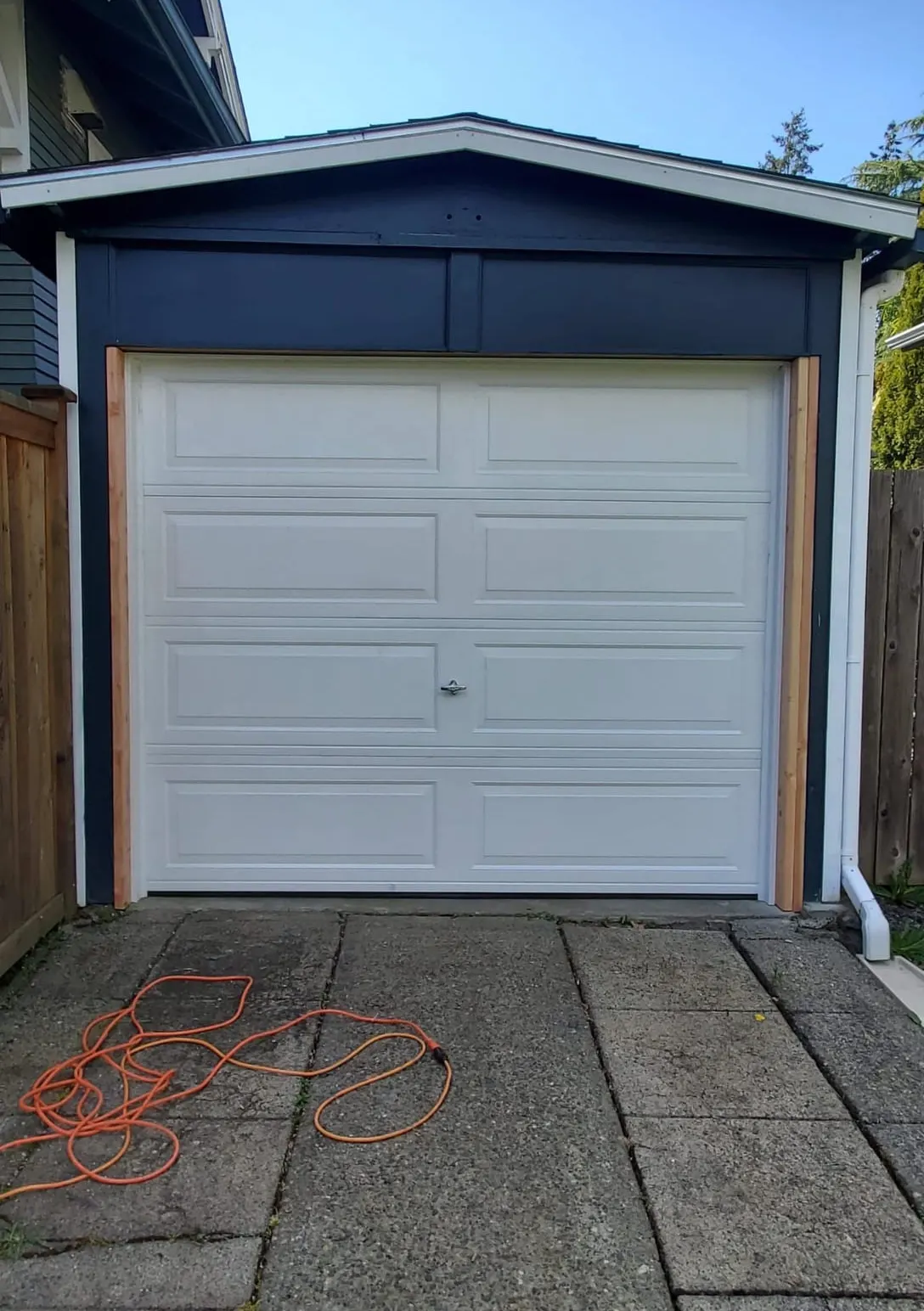
What a Technician Sees on a Typical Call
It usually goes like this: a homeowner picks out a new garage door online or at a showroom, puts down a deposit, and schedules installation. The crew shows up with the door on the truck, and that's when someone mentions the neighborhood association, or the inspector calls about a permit nobody pulled. Now the door is sitting in a driveway, the old one is already off the hinges, and two adults are arguing about whose job it was to check first. This happens often enough around Southgate, Wyandotte, and the rest of the Downriver area that it's worth sorting out before you ever place an order.
Three Different Things, Often Confused
Homeowners frequently lump permits, HOA approval, and wind-load code into one vague worry — "paperwork." They're actually three separate hurdles, and clearing one doesn't clear the others.
Permits
Whether a permit is required depends on your municipality and the scope of the work. A straight swap — same size opening, same type of door, same opener location — is treated as routine maintenance in a lot of places and may not need a permit at all. But if you're enlarging the opening, adding new electrical for a smart opener, or changing the structure around the door (header, jambs, siding), that's a different category, and many building departments want a permit and an inspection before you close the wall back up. The only way to know for certain in your specific city or township is to call the local building department and ask about your exact scope of work — don't assume what applied to your cousin's house in Taylor applies to yours in Riverview.
HOA or Deed Restrictions
Permits are about safety and code. HOA rules are about aesthetics and consistency, and they can be stricter than anything the city requires. A lot of associations specify door color, panel style, whether windows are allowed, and sometimes even the brand or material. Some require you to submit a photo or spec sheet to an architectural committee and wait for written approval before you order anything. Skip that step and you can end up repainting a door you just paid for, or worse, facing a fine while the association makes you change it back. If you live under an HOA, read the covenants section on exterior alterations before you fall in love with a specific door online.
Wind-Load and Structural Codes
This one surprises people because Michigan isn't hurricane country, so it seems irrelevant. But building codes still reference a design wind speed for your area, and garage doors — especially wide double doors — are rated for how much pressure they can take before the panels buckle or the track pulls away from the frame. This matters here because of the humid summer storm pattern Downriver gets, with sudden straight-line winds that can hit a garage door broadside. A door without adequate bracing can bow inward or outward under that kind of gust, which is a real failure mode, not just a code technicality. If your installer swaps a door without checking the bracing requirements for the opening width, you may end up with a door that looks fine but isn't actually rated for how exposed your garage is.
How to Settle It Before You Order
- Call the local building department first, describe your exact project (same-size replacement vs. structural change vs. new electrical), and ask directly whether a permit applies.
- Pull your HOA documents and look specifically for an exterior alterations or architectural review clause. If one exists, submit your door choice for approval before you place a deposit.
- Ask your installer for the wind-load rating and bracing spec of the exact door model and width you're buying, not just a general brochure rating.
- Get approvals in writing — an email or approval letter from an HOA committee is worth far more than a verbal "should be fine" if a dispute comes up later.
The trade-off to plan for: custom or wind-rated doors can have longer lead times than a stock replacement, and if your HOA rejects your first pick, you're back to square one on ordering. Build that time into your plan rather than scheduling installation the week after you decide you want a new door.
When to Call Southgate Garage Door
If you're not sure whether your project needs a permit, or you want a door that's already correctly braced and rated for the opening width before you submit anything to an HOA committee, that's exactly where a site visit helps. As part of our Garage Door Installation service, we measure the actual opening, confirm what bracing and hardware the door needs for its width and exposure, and give you spec sheets and model documentation you can hand straight to a building department or architectural committee — before the door shows up on a truck. If you've already got a door installed that doesn't seem right for the opening, our Garage Door Repair team can assess whether reinforcement or a different panel setup is the fix.
If you're planning a replacement anywhere in Southgate, Wyandotte, Allen Park, Lincoln Park, Taylor, Riverview, Trenton, or Brownstown Township, call Southgate Garage Door before you order. We'll help you get the paperwork right the first time.