
If your garage door won't budge on a cold morning, it's almost always one of two things: ice has physically glued the bottom weatherstrip to the slab, or cold has stiffened the moving parts enough that the opener can't pull its normal weight. Both show up differently, and both have a clear fix once you know which one you're dealing with.
The Symptoms, and What They Usually Mean
Not every "frozen door" behaves the same way. Pay attention to which of these matches your situation:
- The door won't move at all, and the opener strains or clicks. This points to actual ice bonding the rubber seal to the concrete floor.
- The door opens but moves slowly, jerky, or unevenly. This points to stiff rollers, hinges, or thickened lubricant rather than ice.
- The opener reverses the door partway up, or stops short. This usually means the opener's force settings are struggling against added resistance from the cold.
- The door feels heavy when lifted manually. This is often a spring tension issue, which cold weather can expose even if the spring was fine in warmer months.
Southgate's winters make all of these more likely at once — deep cold, snow melt that refreezes overnight, and road salt tracked into the garage all add moisture right where the door meets the floor.
Checking the Causes, in the Order a Technician Would
1. Ice Bonding the Bottom Seal to the Floor
This is the first thing to rule out because it's the most common and the easiest to confirm. Snowmelt or slush drips off a parked car, pools along the threshold, and refreezes overnight, gluing the rubber weatherstrip to the concrete. The fix: never force the opener repeatedly — it strains the motor and gears. Instead, use a hair dryer or heat gun along the seal line to melt the bond, or gently chip the ice away with a plastic scraper. Avoid metal tools near the rubber seal, since they can tear it.
2. Stiff Rollers, Hinges, and Track Hardware
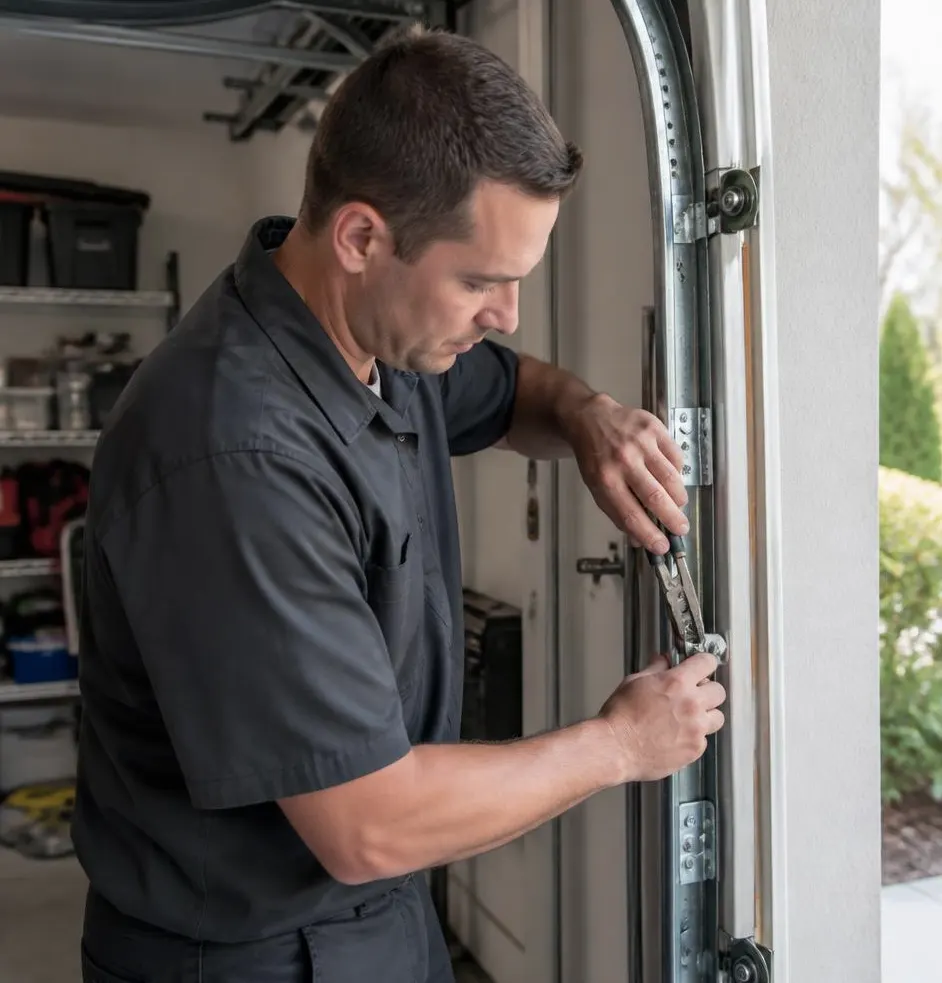
Cold makes metal contract and grease thicken. Rollers that run smoothly in July can bind and squeal in January, especially if they haven't been lubricated since fall. The fix: a technician checks each roller and hinge for free movement, cleans off old gunked-up grease, and applies a lithium or silicone-based lubricant rated for cold temperatures — not household oil, which thickens and attracts grit.
3. Spring Tension Affected by Temperature
Torsion and extension springs are calibrated to lift a specific door weight, and cold metal can shift that balance slightly, making a door that was fine in fall suddenly feel heavy or unbalanced in winter. The fix: this is checked by disconnecting the opener and lifting the door by hand to feel the balance. If the spring is worn, fatigued, or simply at the end of its lifespan, replacement is the only real fix — and it's not a DIY job, since torsion springs are under serious tension.
4. Opener Force Settings and Motor Strain
If ice and hardware check out fine but the door still reverses or struggles, the opener's force and limit settings may need adjusting to account for the added resistance cold weather puts on the system. The fix: a technician tests and recalibrates these settings rather than just cranking up the force, which can mask a mechanical problem and cause the opener to work harder than it should.
5. Worn Weatherstripping Letting Moisture In
If the door freezes to the floor repeatedly, worn or gapped weatherstripping is often the underlying reason moisture reaches the threshold in the first place. The fix: replacing the bottom seal is inexpensive compared to the wear-and-tear of fighting ice all winter, and it pays off again in spring when it keeps mud and runoff out too.
When to Call Southgate Garage Door
If you've thawed the seal and the door still moves slowly, unevenly, or feels heavy, it's worth having it looked at before the cold gets worse. Our Garage Door Maintenance visits cover exactly this — lubrication, hardware inspection, and spring balance checks — and if a spring has lost its tension, our Spring Replacement service gets it swapped safely and correctly. Catching this now is a lot easier than dealing with a door that won't open during the next deep freeze.
If your garage door is fighting you every cold morning, call Southgate Garage Door and we'll get it moving smoothly again before winter really sets in.